Why Your Body Language Matters More Than Your Words
How posture, gestures, and movement influence audience perception and your own confidence on stage.
Read MoreA simple 4-count breathing technique you can use backstage or before any presentation. Works in under two minutes.
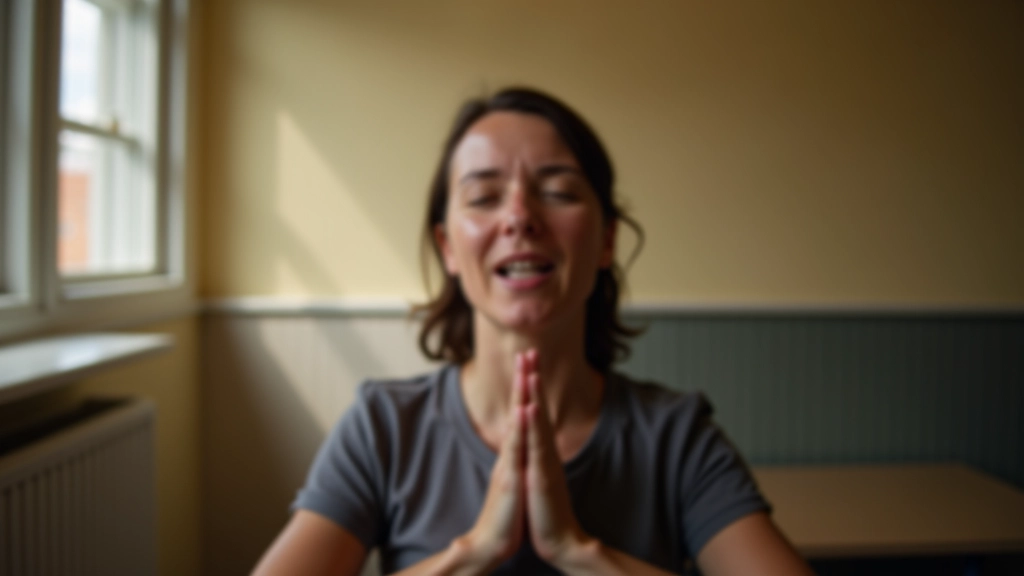

When you’re standing in front of an audience, your body doesn’t know it’s just a presentation. It thinks you’re in danger. Your nervous system floods your bloodstream with adrenaline, your heart rate climbs, and suddenly breathing feels like it requires instructions.
The thing is, you can’t just tell yourself to calm down — that doesn’t work. But you can change your breathing pattern, and that sends a direct signal to your nervous system that everything’s fine. It’s not mystical. It’s biology. Your vagus nerve connects your lungs to your brain, and slow, intentional breathing actually activates your parasympathetic nervous system — the part that handles relaxation.
Most people breathe shallowly when they’re nervous, which actually makes anxiety worse. We’re talking quick chest breathing that keeps your body in alert mode. What you need instead is a breathing pattern that you can control, that doesn’t require thinking about it, and that actually works before you step on stage.
Here’s the breathing pattern we teach in workshops. It’s called box breathing, or sometimes square breathing, and military pilots use it before high-pressure situations. You don’t need special equipment. You don’t need to be in a quiet room. You just need two minutes and a basic rhythm.
Inhale for 4 counts through your nose. Don’t rush it. Feel your belly expand, not just your chest.
Hold for 4 counts. Keep the air in your lungs. Don’t tense your shoulders.
Exhale for 4 counts through your mouth, slowly. Let your shoulders drop as you breathe out.
Hold empty for 4 counts. This is the hardest part. Don’t panic. Just count steadily.
That’s one cycle. It takes 16 seconds. Do this 5-8 times before you present, and you’ll notice your heart rate drops noticeably. We’ve seen people do this backstage right before going on, and it genuinely changes how they perform.

Disclaimer: This article provides educational information about breathing techniques for managing presentation anxiety. It’s not medical advice. If you experience severe anxiety, panic attacks, or breathing difficulties, consult with a healthcare professional. Breathing exercises complement but don’t replace professional mental health support.
The best time to practice is when you’re not stressed. Seriously. Do it once a day for a few days before your presentation, just to get the pattern into your muscle memory. That way, when you’re actually nervous and backstage, your body already knows the rhythm.
Then, about 10 minutes before you present, find a quiet space — a bathroom, hallway, even a corner of the green room. Do 5-8 cycles. You don’t need to make a big thing of it. People breathe. No one’s watching.
Some speakers do it right as they’re walking to the stage. Others do it while waiting in the wings. The timing doesn’t matter as much as doing it consistently. And here’s what’s interesting: after you’ve done this 3-4 times before presentations, your body starts to recognize the pattern and calms down faster each time.
You won’t feel magically confident. That’s not what this does. What you’ll feel is more control. Your hands stop shaking as much. Your voice sounds steadier. You don’t have that tight feeling in your throat. And most importantly, you’re thinking clearly instead of being stuck in panic mode.
We’ve worked with hundreds of people over the past 16 years, and the ones who actually practice this technique beforehand show measurably less nervousness on stage. Some notice it immediately. Others say it takes a couple of presentations before they really feel the difference. But it works because you’re not fighting your nervous system — you’re actually working with it.
The breathing technique isn’t the only thing you need, obviously. You’ll still benefit from practicing your material, knowing your opening line, and having a solid structure. But when it comes to managing that physical anxiety response? This is genuinely one of the most effective tools we know.

You don’t need to be perfect at this. The first time you try it, you might lose count or feel a bit silly. That’s normal. The pattern becomes automatic after a few practice rounds, and then it’s something you can pull out whenever you need it — not just for presentations, but for any high-stress moment.
Give it a real try before your next presentation. Do it once or twice in the days leading up, then use it backstage. See how you feel. Most people are surprised at how much difference 16 seconds of breathing can actually make. And honestly, it’s one of the simplest tools that actually works.
Want to deepen your confidence on stage? Explore more techniques and strategies from our other articles.
Browse More Resources